What Are Office Chair Parts & How to Choose the Right Supplier: Procurement Insights
This article explains the essential parts of an office chair and offers tips for selecting a supplier. The industrial polyurethane with chrome foot ring and casters adjustable laboratory chair is used as an example of high-quality design and supply.
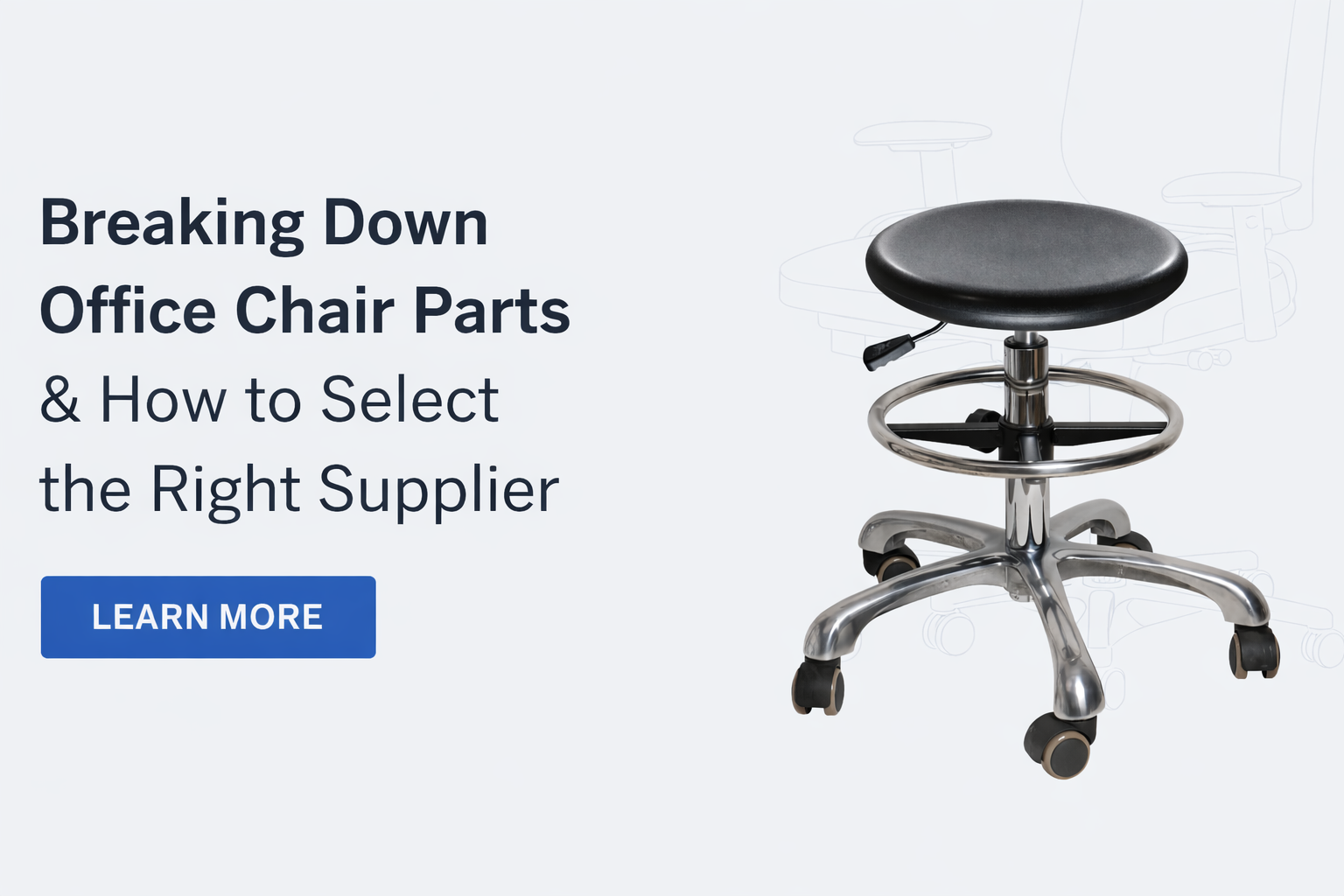
When selecting office chairs for labs, offices, or healthcare facilities, procurement professionals must understand both what the parts are and how to evaluate the suppliers behind them. The smallest components—like casters or foot rings—can determine the success or failure of a large-scale procurement.
1. The Anatomy of an Office Chair
An office chair contains multiple parts, each serving a specific purpose:
Seat Pad: Usually foam or polyurethane; supports the body’s weight.
Backrest: Supports spine alignment and helps posture.
Armrests: Provide elbow support; may be fixed or adjustable.
Gas Cylinder: Enables seat height adjustment.
Base & Casters: Five-star base ensures stability; casters allow movement.
Foot Ring: Essential in lab or drafting chairs for lower body support.
Mechanism Plate: Controls tilt and rocking functionality.
The industrial polyurethane with chrome foot ring and casters adjustable laboratory chair is a perfect example where all parts are optimized for industrial environments—durable, adjustable, and easy to clean.
2. Why Material Quality Matters
A chair is only as good as the parts it’s made from. High-stress usage environments (labs, factories, hospitals) require high-performance materials:
Polyurethane: Chemical-resistant and easy to sanitize
Chrome: Corrosion-resistant and aesthetically professional
Reinforced Casters: Roll smoothly and support weight under stress
That’s why the industrial polyurethane with chrome foot ring and casters adjustable laboratory chair is frequently cited as a model for procurement teams sourcing premium seating solutions.
3. How to Vet a Supplier
A good product doesn’t matter without a trustworthy supplier. Here are five questions to ask:
Can they provide documentation? Look for compliance with BIFMA, ISO, or other international standards.
Do they offer customization? Good suppliers can adapt size, color, or materials to your specs.
Do they have a track record? Ask for examples of similar orders (e.g., industrial or lab chairs).
What are their logistics options? Ensure they ship to your region with proper documentation.
How’s their after-sales service? Can they provide spare parts or replacements?
Suppliers dealing with complex items like the industrial polyurethane with chrome foot ring and casters adjustable laboratory chair usually have professional systems in place to meet all these criteria.
4. Sourcing for Scalability
For long-term projects, don’t just think about one order. Think:
Can the supplier support repeat orders?
Will the product line stay consistent for years?
Can they provide technical drawings for integration?
Products like the industrial polyurethane with chrome foot ring and casters adjustable laboratory chair are usually part of a stable product range, meaning fewer disruptions in multi-year contracts.
READ MORE
We recommend reviewing our complete guide on sourcing office chair parts for further insights.